Column · @myquadbikingdubaimag
What to check before booking an ATV desert ride
Booking an ATV ride in the desert sounds straightforward until the small details start to matter. The difference between a relaxed outing and a disappointing one often comes down to what was checked before payment: the riding format, the bike type, safety arrangements, timing, and the rules that apply on the day. A little preparation helps the ride match the expectations of everyone involved.
The desert is not a flat playground. Sand changes with wind, temperature, and traffic, and a route that feels easy in the morning can feel more demanding later. That is why the best pre-booking checks are practical ones. They focus on what the rider will actually do, what support is available, and what happens if plans change.
Confirm the riding format
Start by finding out whether the ride is a guided tour, a free-ride session, or part of a wider desert safari. These formats feel very different. A guided tour usually follows a set route and keeps the group together, which suits first-time riders and people who want a clear structure. A free-ride format offers more independence, but it also asks for stronger judgement and a good understanding of local rules.
If the outing is attached to a desert safari, check how much time is actually spent riding. Some packages use the quad bike as one activity among several, so the desert drive may be shorter than expected. Ask what the riding segment includes, whether there are stops, and whether the route is suitable for beginners or only for riders with prior experience.
Check the bike type and rider fit
Quad bike types vary in size, power, and handling. A smaller machine can feel more manageable for a new rider, while a larger one may be better suited to someone with experience. The important point is not the look of the bike but whether it fits the rider and the terrain. Before booking quad biking dubai, check whether the operator matches machine size to age, height, riding history, or licence requirements.

It also helps to ask about the controls. Automatic bikes are simpler for beginners because they remove the need to manage gears while steering on sand. If the ride includes a briefing, find out whether it covers throttle control, braking, turning, and what to do if the bike becomes stuck. A clear briefing can make the first few minutes far less stressful.
Review the safety setup
Safety gear is not a minor extra. A safety helmet should be provided in the right size, and it should sit level and feel secure without pressing painfully. Protective gear such as gloves, goggles, long trousers, and closed footwear can also make a real difference, especially when sand is blowing or the route is uneven. Check what is supplied and what riders should bring themselves.
Ask how the ride is supervised. A well-run outing usually has staff positioned along the route, clear hand signals, and a way for riders to stop or ask for help. If the route crosses areas used by other vehicles, supervision matters even more. The aim is not to remove every risk, which is impossible in any outdoor activity, but to make the risks visible and managed.
Understand the terrain and route
Desert terrain can include soft sand, firm tracks, small dunes, and rough patches hidden by shadows. Riders should know whether the route stays on marked paths or includes open dune areas. That detail affects both difficulty and confidence. A route with clear markers is easier to follow, particularly for people who have not ridden in sand before.
Dune bashing is a separate style of driving with its own pace and demands. It is often associated with four-wheel-drive vehicles rather than quad bikes. If the word appears in a package description, check whether it refers to a separate vehicle segment or to the ATV route itself. This avoids the surprise of booking a gentle ride and arriving to find a fast, rough route.
Ask about speed limits and group rules
Speed limits are there for a reason. On sand, stopping distance changes, visibility can drop, and another rider may be just beyond a ridge. Before booking, ask how speed is controlled during the ride. Some outings use a lead rider to set the pace, while others rely on posted rules and staff monitoring.
Group rules are worth checking too. Find out whether overtaking is allowed, how gaps between riders are managed, and what happens if the group splits. Riders who travel with friends may want to stay together, but that may not be possible if the group is divided by experience level. Knowing the rules in advance keeps expectations realistic.

Check timing and conditions
Desert conditions shift through the day. Midday heat can be tiring, while late afternoon light can make dunes look dramatic and shadows more deceptive. Wind can reduce visibility and make loose sand harder to read. When comparing ride times, think about comfort as well as scenery.
Seasonal conditions also matter. In hotter months, hydration and shade become more important. In cooler months, early starts may feel pleasant but the route can still be rough. If a package offers several time slots, ask which ones are usually chosen by beginners and which tend to be busier. A quieter slot can make the ride feel more relaxed.
Look closely at the booking terms
The practical terms often reveal how organised the outing is. Check the meeting point, arrival time, and whether there is a briefing before the ride begins. A rider who arrives late may miss key safety information, so timing is part of the experience rather than a small administrative detail.
Also check what is included in the ride itself. Confirm the duration, the route type, whether photos are part of the package, and whether refreshments or transport are included. Avoid relying on vague descriptions. A clear written outline is easier to compare across options and reduces the chance of misunderstanding on the day.
Review age, ability, and health requirements
Most ATV activities have rules about age and supervision. These rules can depend on the bike type, the route, and local requirements. Check them before booking rather than assuming that everyone in a group can join. Children and younger riders may need a smaller bike, closer supervision, or a different activity altogether.
Riders should also be honest about their own ability. Steering a quad bike over sand uses the body more than many people expect, especially the arms, shoulders, and core. Anyone with a back injury, joint problem, or recent surgery should seek suitable medical advice before taking part. If there is doubt, choosing a gentler route is better than pushing through discomfort.
Know what happens if conditions change
Outdoor plans need flexibility. Strong wind, heavy rain, or safety concerns can affect whether a route runs as planned. Before booking, check the policy for changes, delays, or cancellations. A clear policy is a sign that the activity is managed with realistic expectations.
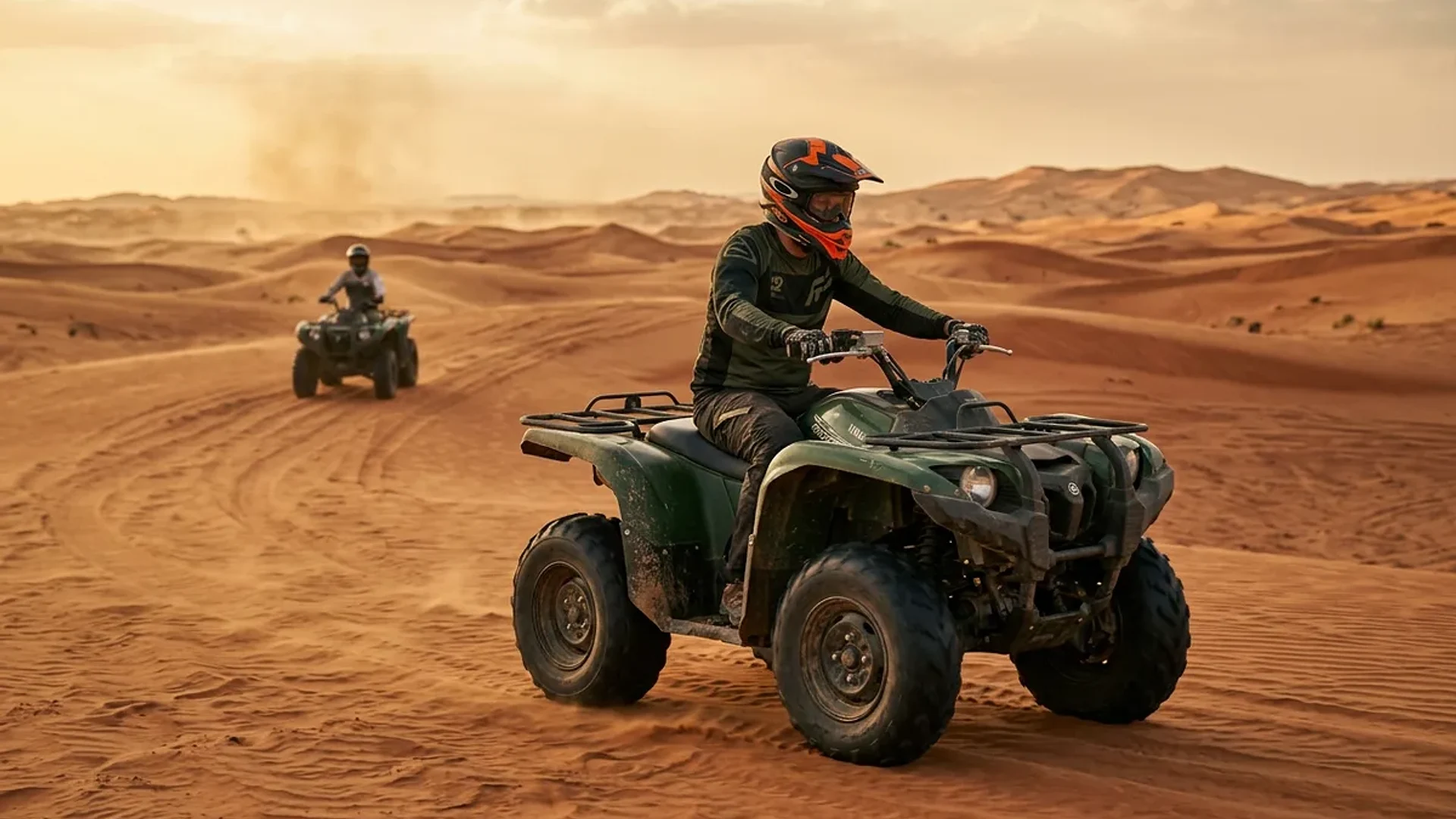
Ask whether riders are notified of changes and what options are available if the route is altered. Sometimes a shorter route or later start is a sensible response to conditions. The key is knowing how decisions are handled instead of guessing on the day.
Make the final comparison
Once the main points are clear, compare options on quality rather than appearance alone. A longer ride is not automatically better if the route is poorly managed. A cheaper option may not include the same safety setup or level of supervision. Look for clear communication, sensible rules, and a route that matches the rider's experience.
Good preparation does not take the spontaneity out of the desert. It gives the ride a sound foundation. When the bike type fits, the safety arrangements are clear, the route suits the group, and the booking terms are understood, the day is far more likely to feel smooth from arrival to finish.